China Top 10 Solar Energy for Home Suppliers?
China’s residential solar market has moved from a niche solution to a mainstream household investment. According to China’s National Energy Administration, the country added more than 277 GW of solar capacity in 2024. Its total installed solar capacity exceeded 880 GW by year-end. These figures show impressive scale, but household buyers need more than factory volume. They need safe installation, dependable warranties, monitoring software, and practical after-sales support.
This guide examines China’s top 10 solar energy for home suppliers through those criteria. The selection considers product quality, manufacturing experience, certifications, system efficiency, service coverage, and export reliability. The International Energy Agency’s Renewables 2024 report expects China to remain the largest contributor to global renewable expansion through 2030. That leadership creates opportunities, yet it also creates confusion. Not every large supplier offers the best home solution. Some specialize in modules, while others provide complete systems with batteries, inverters, and installation support.
Look beyond the name.
A rooftop system should fit the home’s roof angle, electricity demand, local climate, and backup expectations. For example, a family may need evening battery storage after cooking and charging an electric vehicle. Another household may only need daytime generation. This distinction changes the right supplier completely. Product claims can also feel polished, sometimes too polished. Therefore, buyers should verify test certificates, degradation warranties, installer qualifications, and service response times before signing a contract. This comparison offers a useful starting point, but independent technical checks remain essential.

China’s 2024 Solar Market: 887 GW of Cumulative PV Capacity
China’s solar market reached about 887 GW of cumulative photovoltaic capacity in 2024, according to widely reported national energy data. This figure shows more than manufacturing strength. It reflects rapid rooftop adoption, expanding rural installations, and stronger grid integration. Homeowners now face a crowded supplier market. A top-ten list should measure more than price or shipment volume.
Reliable suppliers usually provide complete system documentation, verified safety testing, and clear after-sales support. Check inverter efficiency, battery cycle life, waterproof ratings, and panel degradation guarantees. Ask whether the supplier has trained installation partners in your region. A low-cost quotation can hide weak wiring, limited monitoring, or expensive replacement work. Numbers can mislead.
For a typical home, shading analysis matters as much as panel capacity. A chimney, balcony rail, or nearby tree can reduce daily output noticeably. Request an hourly production estimate, not only an annual forecast. Compare grid rules, storage requirements, fire protection, and warranty terms before signing. Suppliers should explain these details in plain language. Some sales proposals still promise ideal performance. That deserves careful questioning. A better shortlist includes companies with transparent test reports, stable technical teams, traceable components, and documented service response times. Real installations also reveal practical issues, such as roof access, winter maintenance, and battery noise. These details rarely appear in glossy brochures.
China Top 10 Solar Energy for Home Suppliers? — China’s 2024 Solar Market: 887 GW of Cumulative PV Capacity
Key national-level indicators for evaluating China’s residential and distributed solar market in 2024
| Market Dimension |
2024 Figure |
Unit |
Market Relevance |
| Cumulative grid-connected solar PV capacity |
887.00 |
GW |
China remained the world’s largest solar PV market, creating a large base for residential, commercial and utility-scale applications. |
| New solar PV capacity added during 2024 |
277.17 |
GW |
Annual additions show the exceptionally strong pace of new solar deployment and continued demand for PV equipment and installation services. |
| New centralized solar capacity |
159.88 |
GW |
Large ground-mounted projects represented the biggest portion of new PV installations in 2024. |
| New distributed solar capacity |
117.29 |
GW |
Distributed installations accounted for a substantial share of new capacity, supporting continued demand for rooftop and behind-the-meter systems. |
| Estimated cumulative centralized PV capacity |
≈516.70 |
GW |
Centralized projects continued to form the largest installed segment of China’s PV fleet. |
| Estimated cumulative distributed PV capacity |
≈370.30 |
GW |
Distributed PV represented approximately 41.7% of cumulative solar capacity, highlighting the importance of rooftop and local-generation solutions. |
| Total renewable power capacity |
1,889 |
GW |
Renewables made up approximately 56.7% of China’s total installed power-generation capacity by the end of 2024. |
| Total installed power-generation capacity |
≈3,340 |
GW |
The expanding national power system provides a broad grid and electricity-demand base for additional PV deployment. |
| Solar electricity generation |
839.20 |
billion kWh |
Solar generation increased significantly and strengthened the role of PV in China’s electricity supply mix. |
| Solar generation year-on-year growth |
28.4 |
% |
Strong generation growth reflects the rapid expansion of installed PV capacity and improving utilization of solar assets. |
Data sources: China National Energy Administration and the National Bureau of Statistics of China. Figures are for mainland China and rounded where indicated; cumulative centralized and distributed values are approximate segment estimates derived from the reported national PV total.
How to Rank the Top 10 Chinese Home Solar Suppliers by Industry Data
China Top 10 Solar Energy for Home Suppliers?
A credible ranking of Chinese home solar suppliers should begin with industry data, not online popularity. Public shipment records, audited revenue, export history, and factory capacity reveal business scale. Yet scale alone can mislead. A large supplier may offer weak support for smaller residential projects.
Ranking requires several measurable criteria. Product reliability should include warranty length, certification records, inverter failure rates, and independent test results. Delivery performance matters too. Review average lead times, order delays, and customs documentation across the past three years. After-sales service deserves a clear score. Measure response time, spare-part availability, installation guidance, and claim resolution.
Use a transparent weighting model. For example, product quality may represent 30 percent, financial stability 20 percent, delivery performance 15 percent, service 20 percent, and innovation 15 percent. Adjust the model for different buyer needs. A rural installer may value replacement speed more than research spending. Data should come from public filings, trade databases, verified customer interviews, and third-party laboratories.
Some evidence remains incomplete. Suppliers may report capacity differently, while customer complaints often stay private. That creates ranking noise. Check at least two independent sources for important claims. Visit factories when possible. Request recent batch records and sample products. A ranking published without a clear data date can become outdated quickly. Industry performance changes faster than a polished webpage suggests.
China Top 10 Solar Energy for Home Suppliers — Industry Ranking Context
China’s annual newly installed distributed photovoltaic capacity increased from 12.20 GW in 2019 to approximately 96.29 GW in 2023. This market-growth indicator can be used alongside product quality, warranty terms, delivery capability, certification, after-sales service, and residential system integration when evaluating leading Chinese home solar suppliers. The chart presents industry-level data only and does not disclose company or brand performance.
Source: National Energy Administration of China, annual photovoltaic installation statistics; capacity shown in gigawatts (GW).
Comparing Module Efficiency of 20%–23%, Output, and Degradation Rates
China Top 10 Solar Energy for Home Suppliers?
When comparing ten Chinese home-solar suppliers, module efficiency deserves careful attention. Fraunhofer ISE’s Photovoltaics Report 2024 places mainstream crystalline-silicon modules near the
20%–23% efficiency range.
22%
A 22% module can produce roughly 440 watts under standard test conditions, assuming a two-square-metre surface.
23%
A 23% module may reach about 460 watts.
That difference matters on a small roof.
However, rated output is not the whole story. Real production changes with
heat, shade, dirt, and roof direction.
IEA PVPS reports show that field degradation often falls near 0.3%–0.5% annually, although results vary by climate and installation quality.
After 25 years, a 0.3% rate preserves about
93% of original output.
At 0.5%, retention approaches
88%.
These figures are useful, but warranties should not replace independent testing. Some product sheets also present ideal values too confidently. That deserves scrutiny.
Tips:
Compare efficiency, wattage, temperature coefficient, and guaranteed degradation together. Check third-party results from PV Evolution Labs or TÜV testing when available. Ask for measured performance at high temperatures, not only laboratory ratings.
A slightly less efficient module may produce more energy if it handles heat better. Also inspect roof dimensions carefully.
I once underestimated shading from a nearby wall; the mistake reduced expected output more than a one-percent efficiency gap.
Assessing 5–15 kWh LFP Batteries, 90%+ Efficiency, and Safety Standards
China’s home-solar suppliers increasingly offer 5–15 kWh LFP battery systems for evening loads. A 10 kWh unit may cover lighting, refrigeration, Wi-Fi, and a small heat pump overnight. However, capacity is not the same as usable energy. In practice, inverter losses, temperature, reserve settings, and battery aging reduce delivered power.
The International Energy Agency reported that battery storage deployment expanded sharply in 2023, increasing pressure for safer and more efficient systems. For residential products, a claimed 90%+ round-trip efficiency should include the battery, inverter, and control system. Ask for test conditions, not only a datasheet number. A 10 kWh battery at 92% system efficiency delivers about 9.2 kWh before reserve limits. Small details matter.
Safety evidence deserves equal attention. IEC 62619 covers industrial lithium battery safety, while IEC 63056 addresses secondary lithium cells used in energy storage systems. UL 9540 and UL 9540A testing can provide additional evidence for system safety and thermal-runaway behavior. Installation should also follow local electrical rules and fire-protection requirements. The U.S. National Renewable Energy Laboratory notes that real-world storage performance depends strongly on operating conditions and system design. That is easy to overlook. Supplier evaluation should include cycle-life test methods, protection architecture, emergency shutdown, software records, and independent certification. A polished factory video proves very little. Even a 90% efficiency figure may change after several years.
Reviewing Inverters, 25-Year Warranties, Certifications, and Service Networks
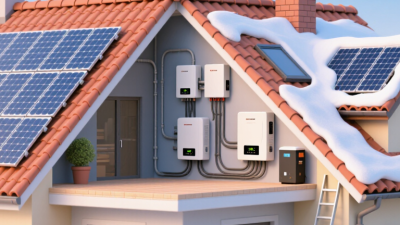
Choosing among China’s top solar energy suppliers for home use requires more than comparing panel prices. Inverters deserve close attention because they manage daily energy conversion. Check efficiency, backup options, monitoring quality, and replacement procedures. A clear display should show faults, battery status, and household output. Small details matter.
A 25-year warranty can sound impressive, but read its actual coverage. Many warranties protect panels for performance, while inverter warranties may last only 10 to 12 years. Confirm who pays for labor, shipping, and removal. I would also verify IEC or UL testing through official certification records, not a supplier’s brochure alone. Certification must match the exact model. Installation documents should include serial numbers, test results, and grid-connection guidance.
Service networks often reveal a supplier’s real reliability. Ask whether support is handled locally, how quickly technicians respond, and where replacement parts are stored. A remote hotline is not enough when an inverter fails during a winter outage. I once focused too heavily on efficiency figures and overlooked after-sales training. That was a costly assumption. Request sample service tickets, escalation contacts, and warranty claim timelines. Independent reviews can help, but they may reflect unusual climates or installation quality. Compare several suppliers using the same checklist, then inspect the contract carefully before making a decision.