Unirac

How to Choose the Right Solar Panel System?

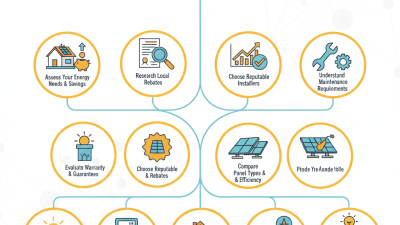
Choosing the right solar panel system starts with your roof, electricity use, and long-term plans—not with the cheapest online package. A home shaded by tall trees needs a different design from a sunlit warehouse roof. Review twelve months of utility bills, note seasonal changes, and inspect available roof space before comparing equipment. Small details matter. Roof direction, pitch, nearby buildings, and local weather can change expected production. In practical projects, attractive proposals often weaken when installers overlook afternoon shade or future appliance upgrades. That mistake is easy to repeat.

A reliable decision also requires technical and financial checks. Compare panel efficiency, inverter type, battery options, degradation rates, product warranties, and workmanship coverage. Ask for a written production estimate based on your location, not a generic national average. An experienced, certified installer should explain assumptions clearly and provide references, permits, and maintenance expectations. Independent guidance from recognized energy authorities can help you test sales claims. Numbers still need judgment. A larger system is not automatically better, and batteries may not suit every household. Consider roof age, financing terms, grid rules, backup needs, and likely time in the property. Leave room for doubt. Solar technology is improving, but every site has limits. The best solar panel system balances safe installation, realistic output, transparent costs, and your daily energy habits. It should make sense on paper and on your roof.

How to Choose the Right Solar Panel System?

Define Your Home’s Energy Needs and Solar Goals

How to Choose the Right Solar Panel System?

Define Your Home’s Energy Needs and Solar Goals

Start with twelve months of electricity bills, not one unusually low month. Record your average usage, peak summer demand, and future changes, such as an electric vehicle or heat pump. Walk through your home and list major appliances. Note when they operate. A water heater running at night creates different solar needs than daytime cooling.

Your roof matters, but your daily habits matter more. Check roof direction, usable space, shade from trees, and possible repairs. A shaded roof may produce less power than its area suggests. Ask a qualified installer for a site assessment and a clear production estimate. Request calculations based on local sunlight, roof angle, and seasonal weather. Do not accept vague promises.

Set a practical goal.

Some households want lower annual bills. Others need backup power during outages. These goals may require different system sizes, battery capacity, and electrical upgrades. My first estimate was too optimistic because I ignored winter heating loads. That mistake changed the design. Review local grid rules, export limits, and billing charges before choosing equipment. Keep several recent bills available, and compare expected savings with maintenance, financing, and replacement costs. A system that meets your real usage is usually more useful than the largest system that fits your roof.

How to Choose the Right Solar Panel System?

Define Your Home’s Energy Needs and Solar Goals

This planning chart compares typical annual household electricity-use scenarios with the solar capacity needed to offset 100% of that consumption. The estimate uses an average solar production assumption of approximately 1,400 kWh per installed kW per year. Review your utility bills, future electricity needs, roof conditions, shading, and local solar production before selecting a system size.

Compare Solar Panel Types, Efficiency, and Available Space

How to Choose the Right Solar Panel System?

Available roof space should guide your solar choice, not efficiency figures alone. Monocrystalline panels usually provide the highest output per square metre. They suit smaller roofs or homes with limited usable space. Polycrystalline panels can cost less, but they generally need more area for similar capacity. Thin-film panels are lightweight and flexible. However, their lower efficiency may require a much larger surface.

Measure the roof after excluding vents, skylights, chimneys, and maintenance paths. A 40-square-metre roof may provide only 28 square metres of practical panel space. Shade matters too. A nearby tree can reduce production during several morning hours. A site survey should record roof direction, tilt, seasonal shadows, and local weather patterns. Do not trust a rough satellite estimate alone.

Efficiency is only one part of performance. Check the panel’s temperature response, low-light behaviour, warranty terms, and expected annual degradation. A highly efficient panel may still produce less energy if installed on a shaded roof. An installer should model yearly output, including inverter and wiring losses. That estimate will never be perfect. I would question any proposal showing identical monthly production. Real sunlight changes, and roofs are rarely ideal. Leave enough space for safe access, even if fewer panels fit.

Evaluate Roof Conditions, Sunlight Exposure, and Installation Limits

Choosing the right solar panel system requires more than comparing wattage. The roof is the first practical checkpoint. I inspect shingles, flashing, drainage, and visible sagging before discussing panel capacity. A roof nearing replacement may make solar installation premature. Repairing it later can require costly panel removal. That lesson is easy to overlook. Roof direction matters, but sunlight changes hour by hour. A south-facing plane may perform well, while nearby trees create afternoon shadows. Use a shade study across seasons, not a single midday observation. Chimneys, vents, and rooftop equipment can reduce usable area. Keep walkways and required setbacks clear for maintenance and safety.

Installation limits also include structure, wiring, and local approval requirements. An older roof may need a structural review, especially in snowy or high-wind regions. The electrical service must support the proposed system and its protective equipment. A qualified installer should verify load calculations, attachment methods, grounding, and weather sealing. Confirm permit requirements with the local building department. Ask for written production estimates and the assumptions behind them. They should show shading, roof tilt, weather data, and expected system losses. Be cautious with perfect forecasts. Real output varies. I once treated a clean roof as an easy project, but overlooked morning shade from a neighboring building. That mistake changed the design and delayed approval.

Choose the Right System Size, Battery Storage, and Inverter

How to Choose the Right Solar Panel System?

System size should follow measured electricity use, not roof space alone. I start with twelve months of utility bills and note seasonal peaks. The IEA PVPS Trends 2024 report recorded more than 400 GW of new solar capacity worldwide in 2023. Solar is expanding quickly, but every site performs differently. A 5 kW array receiving four peak-sun hours daily could produce about 6,280 kWh annually after a 14% loss allowance. NREL’s PVWatts documentation uses that loss assumption as a practical default. Shade, roof direction, dust, and winter weather can reduce output further. My first sizing mistake was trusting an annual average too much.

Battery storage should protect specific loads, such as refrigeration, lighting, internet equipment, or medical devices. It should not automatically back up every appliance. NREL’s 2024 Annual Technology Baseline models lithium-ion battery round-trip efficiency near 85%. Therefore, a 10 kWh battery may deliver roughly 8.5 kWh after charging and discharging losses. Usable capacity, reserve settings, and degradation matter. Oversizing storage can quietly increase costs. Undersizing it creates disappointing evenings.

The inverter must handle continuous demand, starting surges, and the array’s operating voltage. A refrigerator may draw several times its running power during startup. Check those figures before choosing inverter capacity. A slightly larger solar array can improve morning and late-afternoon production, but excessive oversizing may increase clipping. Local electrical rules, shutdown requirements, and installation conditions need professional verification. The cheapest design is not always the most dependable one.

Compare Costs, Warranties, Incentives, and Installer Credentials

Choosing a solar panel system starts with comparable numbers, not a polished sales presentation. Berkeley Lab’s Tracking the Sun 2024 report found that residential systems installed in 2023 commonly exceeded $3 per watt before incentives. Request an itemized quote showing panels, inverter, mounting, labor, permits, battery equipment, and expected annual production. A cheaper system may use fewer panels or weaker service coverage. Ask for proof.

Warranties deserve careful reading. Panel performance warranties often cover 25 to 30 years, while product warranties may cover 10 to 25 years. Inverter coverage is usually shorter, and workmanship protection varies by installer. Check who handles claims, whether labor is included, and what happens if the installer closes. Read the fine print. Incentives can reduce the purchase price, but eligibility, tax treatment, utility rules, and deadlines differ by location. The International Energy Agency’s Photovoltaic Power Systems Programme reported about 456 gigawatts of new solar capacity worldwide in 2023, showing rapid growth but not guaranteeing local savings.

Installer credentials matter as much as hardware. Verify electrical licensing, insurance, permit experience, safety records, and recent customer references. Require a site assessment that addresses roof age, shade, snow or wind exposure, panel orientation, and utility limits. Do not guess. Production estimates are forecasts, not promises; weather, soiling, and future roof repairs can change results. I would challenge my own assumptions by comparing at least three proposals and checking each estimate against independent solar data. A confident salesperson is not evidence of technical competence. Government energy-efficiency guidance and utility interconnection documents should support the final design, not merely decorate the paperwork.

How to Choose the Right Solar Panel System? - Compare Costs, Warranties, Incentives, and Installer Credentials

Comparison Dimension Typical Value or Requirement What to Compare Decision Guidance
System Size and Energy Production
Typical residential system size Approximately 5–10 kW DC for many homes Annual electricity use, roof area, roof orientation, shading, and local solar resource Size the system from 12 months of utility bills rather than using a standard package size.
Estimated annual production Approximately 1,000–1,700 kWh per installed kW per year in the United States Production estimate from the installer’s modeling software and the assumptions used Ask for a shading analysis and a month-by-month production forecast.
Panel efficiency Common residential module efficiency: approximately 19%–23% Efficiency, rated power, temperature coefficient, and physical dimensions Higher efficiency can be useful when roof space is limited, but it may not provide the lowest total cost.
Installed Cost and Financing
Solar-only installed price About $2.50–$4.50 per watt before incentives Equipment, labor, permitting, design, interconnection, taxes, and roof-related work Compare at least three itemized proposals using the same system size and production assumptions.
Example 6 kW system price Approximately $15,000–$27,000 before incentives Total contract price, cash price, loan amount, and any dealer or origination fees Evaluate the cash price separately from the financed total repayment.
Battery storage add-on Often approximately $8,000–$18,000 installed for a residential battery system before incentives Usable capacity, continuous power, round-trip efficiency, backup loads, and replacement terms Storage may improve backup capability and time-of-use savings, but it can lengthen the payback period.
Cost-per-watt calculation Total installed price ÷ system size in watts Whether all proposals include the same scope of work Exclude incentives from the initial comparison so proposals can be evaluated consistently.
Warranties and Long-Term Performance
Panel product warranty Commonly 10–25 years Coverage for manufacturing defects, labor, shipping, and claim administration Confirm who handles warranty claims and whether labor is included.
Panel performance warranty Commonly 25–30 years, with a stated end-of-term output commonly around 80%–90% of original rated output First-year degradation, annual degradation rate, and end-of-term guaranteed output Compare the guaranteed output curve rather than relying only on the warranty duration.
Inverter warranty Commonly 10–25 years, depending on inverter type and coverage option Replacement equipment, labor, shipping, monitoring, and optional extended coverage Ask whether the warranty remains valid if the original installer is no longer operating.
Battery warranty Commonly 10 years, with energy-throughput or cycle limits Usable capacity retention, cycle count, throughput limit, and operating temperature range Check both the calendar duration and the maximum energy that may be processed under warranty.
Workmanship warranty Commonly 5–15 years Roof penetrations, mounting, wiring, water intrusion, and installation defects Obtain the workmanship warranty in writing and verify the responsible legal entity.
Incentives, Utility Rules, and Ownership
U.S. federal residential clean energy credit 30% of eligible solar and qualified storage costs for qualifying systems placed in service during 2022–2032 Tax liability, eligible costs, placed-in-service date, and current federal requirements This is a tax credit, not necessarily a cash rebate. Consult a qualified tax professional before relying on it.
Future federal credit schedule 26% for 2033, 22% for 2034, and scheduled expiration after 2034 under current law Any legislative changes before the installation date Verify the rules at the time of purchase because tax legislation and eligibility can change.
State and local incentives Varies widely; may include rebates, tax credits, sales-tax exemptions, property-tax treatment, or performance payments Eligibility, funding limits, application deadlines, and interaction with utility programs Use official state, local, and utility sources rather than relying solely on an installer’s estimate.
Net-metering or export compensation Varies by utility and jurisdiction; exported electricity may receive retail, avoided-cost, or another approved rate Export rate, monthly fees, credit expiration, annual true-up, and system-size limits Request the current tariff in writing and model both self-consumption and export scenarios.
Ownership options Cash purchase, solar loan, lease, or power-purchase agreement Total lifetime cost, escalation clauses, transfer terms, maintenance responsibility, and tax-credit recipient Compare the total payments over the full contract term, not only the monthly payment.
Installer Credentials and Proposal Quality
Required legal authorization Active contractor license where required, electrical license or qualified electrical subcontractor, and building permits License number, expiration date, disciplinary history, and permit responsibility Verify credentials directly with the relevant state or local licensing authority.
Technical certification Recognized solar training or certification, such as NABCEP certification where applicable Certification type, holder’s name, expiration date, and role on the project Certification supports competence but does not replace licensing, insurance, or a detailed contract.
Insurance coverage General liability, workers’ compensation where required, and vehicle coverage appropriate to the work Policy limits, current certificates, and whether subcontractors are covered Request current proof of insurance before signing.
Experience and references Documented local installations and references from recent customers Similar roof types, system age, completed permits, service response, and warranty experience Contact references independently and inspect completed installations when possible.
Proposal transparency Written scope covering equipment specifications, system size, production estimate, price, schedule, and exclusions Model assumptions, roof work, electrical upgrades, monitoring, permitting, interconnection, and change-order terms Reject proposals that use vague equipment descriptions or omit major cost categories.
Payment schedule Milestone-based payments tied to contract progress and local legal requirements Deposit amount, cancellation rights, final payment timing, and conditions for releasing payment Avoid paying the entire contract price before installation and inspection are complete.
Practical Selection Checklist
Recommended comparison process
  • Collect 12 months of electricity bills and identify expected future electricity use.
  • Obtain at least three itemized proposals with comparable system sizes and production estimates.
  • Compare total installed cost, estimated annual savings, warranty scope, and projected payback.
  • Verify licenses, certifications, insurance, references, permits, and utility-interconnection responsibilities.
  • Confirm every incentive and utility assumption with an official source before signing.
  • Read the contract for ownership, roof replacement, cancellation, monitoring, maintenance, warranty, and transfer provisions.
Data note: Cost, production, warranty, and incentive figures are general U.S. planning ranges and common industry terms, not guaranteed quotations. Actual results depend on location, roof conditions, utility rules, equipment selection, permitting, financing, and tax eligibility. Verify current requirements with the U.S. Department of Energy, the Internal Revenue Service, the applicable state or local authority, and the electric utility.