Choosing a commercial solar panel manufacturer in China is not just a price comparison. Buyers must assess module efficiency, product warranties, manufacturing quality, and the supplier’s ability to support projects over time. Factory scale matters, but it cannot guarantee consistent performance. Real projects depend on dependable documentation, clear communication, and panels suited to local conditions. Details matter.
IEA Executive Director Fatih Birol captured the broader shift: “I see solar becoming the new king of the world's electricity markets.” His observation underlines why commercial buyers are comparing suppliers carefully. Yet a strong market outlook does not make every product or manufacturer equally suitable. A neat ranking can still mislead.
This guide introduces leading Chinese manufacturers and the factors worth checking before requesting a quote. Compare product specifications, testing records, warranty terms, production capacity, and after-sales support. Look for evidence that matches the exact module model, not only broad company claims. Also consider how shipping schedules and project requirements affect the final choice. No single manufacturer fits every installation. Some details may be difficult to verify from public information alone, so buyers should ask direct questions and review current documents. The aim is practical comparison, not a perfect verdict.
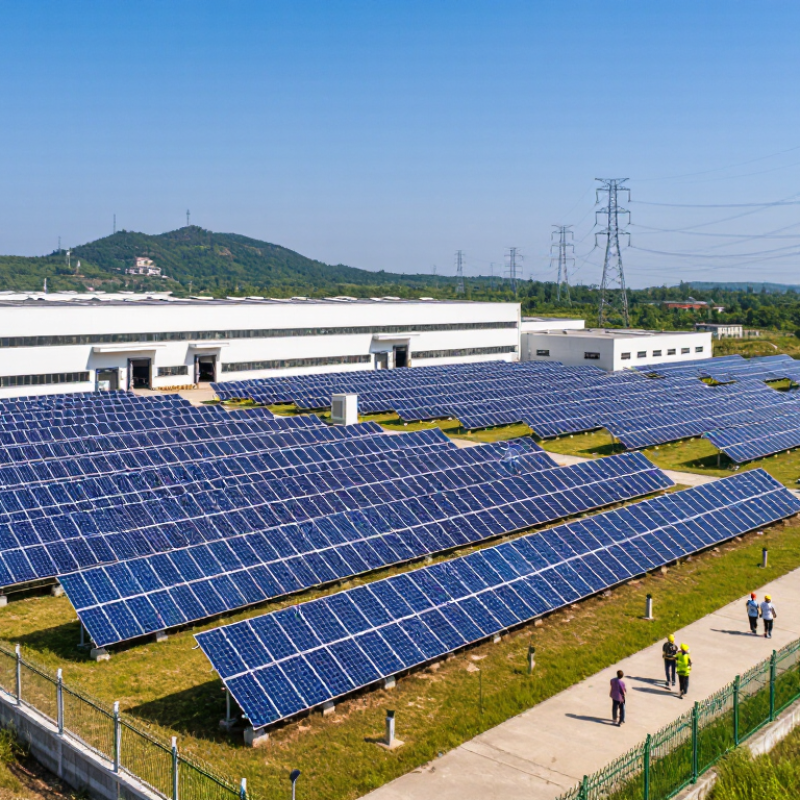
China’s commercial solar panel industry is supported by a dense supply chain, from silicon processing and cell production to module assembly. Many production facilities are concentrated in industrial regions with access to glass, aluminum frames, junction boxes, and shipping services. This proximity can help manufacturers coordinate production and respond to large orders. Scale matters, but it does not guarantee consistent quality.
Commercial modules are commonly designed for rooftop warehouses, factories, and ground-mounted projects. Buyers may compare power output, module dimensions, temperature performance, and product warranties. A factory’s quality process also deserves close attention: ask how incoming materials are checked, how modules are tested, and how production records are maintained. Small details matter, such as whether labels remain readable after handling.
Production capacity can look impressive on a presentation. Verify it against recent output and delivery schedules. Independent test reports and clear documentation provide stronger evidence than sales claims alone. Some manufacturers offer customized formats, but unusual specifications may affect cost, lead time, or replacement availability. A neat spreadsheet can hide these trade-offs. China’s manufacturing base offers broad options, yet a careful assessment should include communication, packaging, and after-sales support—not price alone.
Annual production across three major stages of China's solar PV manufacturing supply chain.
Wafer, cell, and module production reached 622 GW, 545 GW, and 499 GW, respectively. These figures describe manufacturing output, not installed capacity or product quality. Source: China Photovoltaic Industry Association (CPIA), 2023 industry statistics.
Evaluating Chinese commercial solar panel manufacturers starts with evidence, not factory size. The International Energy Agency’s 2022 report, Solar PV Global Supply Chains, found that China held more than 80% of global manufacturing capacity across key solar supply-chain stages. That scale supports broad production and supply options, but does not prove any single factory’s quality. Ask for the exact production-site address, recent third-party audits, and traceable batch records. Check that module certificates match the model and factory being offered. Small detail, big difference.
Then assess performance under your site conditions. The NREL review Photovoltaic Degradation Rates—An Analytical Review reported a median module degradation rate of about 0.5% per year, while actual results vary by climate and product. Request independent test reports, warranty terms, and field data from installations with similar heat, humidity, dust, and wind exposure. A long warranty is only useful if its exclusions and claim process are clear. Compare power tolerance, temperature coefficients, and mechanical-load ratings—not just quoted efficiency. Paperwork can look perfect; operating records may be uneven. If data is missing, treat that as a risk, and ask the supplier to explain it before comparing prices.
China’s leading commercial solar panel manufacturers are judged by more than factory size. Buyers should examine production consistency, documented quality controls, and experience with large project orders. A useful supplier can explain how cells are sorted, how modules are laminated, and how finished panels are checked for defects. Ask for sample inspection records, traceability details, and test reports that match the exact product being quoted.
Look closely at project fit. A rooftop with limited space may need higher output per panel, while a ground-mounted site may prioritize cost and straightforward installation. Check product dimensions, electrical data, delivery capacity, and warranty terms together. Standards and certification needs can differ by market, so confirm them with qualified local advisers before ordering. Details matter.
Factory visits or independent audits can help verify equipment, storage conditions, and quality procedures. Still, a polished tour is not proof of long-term performance. No manufacturer is perfect. Even strong suppliers can face delays or inconsistent batches, and buyers should plan for this possibility. Compare several quotations, clarify what happens if inspection results fall short, and keep technical agreements in writing. A careful evaluation takes time, but it can prevent costly surprises after panels reach the site.
| Technology or Procurement Dimension | Typical Commercial Market Information | Why It Matters to Buyers | What to Verify |
|---|---|---|---|
| Monocrystalline PERC | A mature crystalline-silicon cell technology. Commercial module efficiency commonly falls around 20–22%, depending on product design and production period. | Can suit projects prioritizing established product availability and competitive upfront pricing. | Check the module datasheet, production date, efficiency, degradation terms, and availability of replacement modules. |
| N-type TOPCon | A widely offered n-type cell technology. Commercial module efficiency is commonly around 21–23%, with exact values varying by module format and design. | Higher-efficiency options can help make better use of limited roof or site area. | Compare certified nameplate efficiency, temperature characteristics, warranty conditions, and independently verified test reports. |
| Heterojunction (HJT) | A commercial n-type cell technology available in high-efficiency module designs; actual efficiency and electrical characteristics are product-specific. | May be considered where high output per unit area or performance in elevated temperatures is important. | Review the product-specific temperature coefficient, operating conditions, degradation warranty, and total system economics. |
| Commercial module power | Many current large-format commercial modules are offered roughly in the 400–700 W range. Rated power depends on module size, cell count, and product generation. | Module dimensions and weight affect roof layout, handling, mounting, and the number of modules required. | Confirm the exact model number, dimensions, weight, electrical ratings, and compatibility with the inverter and mounting system. |
| Common wafer formats | M10 wafers are approximately 182 mm square; G12 wafers are approximately 210 mm square. Module layouts and dimensions differ by product. | Format influences module size, current, string design, transport, and installation requirements. | Use the module datasheet to check dimensions and current values rather than relying on wafer-format labels alone. |
| Bifacial modules | Bifacial modules can generate electricity from light reaching the rear side. Additional energy yield depends on albedo, mounting height, shading, and system design. | They may be beneficial for suitable ground-mounted or elevated installations but do not guarantee a fixed energy gain. | Check the bifaciality specification and ensure yield estimates state their albedo, geometry, and shading assumptions. |
| Glass-glass construction | Uses glass on both sides of the module; it is available in both monofacial and bifacial product designs. | Construction can affect durability, weight, handling, and mounting requirements. | Confirm module mass, approved mounting methods, mechanical-load ratings, and the applicable product warranty. |
| Product and performance warranties | Commercial product warranties are commonly offered for about 12–15 years, while performance warranties often extend to 25–30 years; terms vary by model and supplier. | Warranty duration alone does not establish the practical value or ease of making a claim. | Read the applicable warranty document for exclusions, degradation limits, claim procedures, governing law, and responsible legal entity. |
| Product qualification and safety | IEC 61215 covers design qualification and type approval for terrestrial photovoltaic modules; IEC 61730 addresses photovoltaic module safety qualification. | Relevant certification supports product evaluation but does not by itself guarantee project performance or supplier reliability. | Verify certificates and reports against the exact module model, factory, and market requirements. |
| Factory quality and traceability | Manufacturing controls, serial-number traceability, inspection records, and consistent production are important supplier-evaluation factors. | Traceable quality records help buyers assess consistency and manage warranty or project issues. | Request factory audit information, sample inspection records, serial-number verification procedures, and shipment-specific documentation. |
| Delivery and project support | Lead times, export packaging, shipping terms, technical documentation, and after-sales support depend on the supplier, destination, and order size. | Logistics and support can affect project schedules and total installed cost. | Obtain written delivery schedules, packing specifications, Incoterms, technical support arrangements, and claim-response commitments. |
Values shown are indicative market ranges, not guarantees or a ranking of individual manufacturers. Confirm all specifications, certifications, warranties, and commercial terms against the exact product documentation and project requirements.
Commercial solar panels from China are built around several cell technologies, including PERC, TOPCon, and heterojunction designs. These differ in efficiency, temperature response, and cost. Bifacial modules can collect light from both sides, but they work best above reflective surfaces with suitable mounting. On a dark warehouse roof, that benefit may be limited. Details matter.
Product choices include standard framed modules, glass-glass panels, and larger formats designed for utility-scale layouts. Commercial buyers often compare rated output, dimensions, mechanical load ratings, degradation terms, and independent test documentation. A panel that fits a rooftop neatly can reduce awkward gaps and simplify installation. Check roof capacity before selecting heavier glass-glass products. Small mismatches add up.
Applications range from factories and distribution centers to carports and ground-mounted sites. A hot, dusty roof needs attention to operating temperature, cleaning access, and drainage, not just peak wattage. For carports, module dimensions affect both structural spacing and vehicle clearance. Manufacturer data can guide screening, but it cannot replace site-specific engineering. A polished datasheet is not the whole story. Compare warranty conditions and test results carefully; even experienced project teams can overlook how local shade or maintenance routines change expected performance.
Choosing a commercial solar panel manufacturer in China should begin with the project, not a sales brochure. Define the site’s roof or ground conditions, target capacity, climate, and grid requirements before comparing quotations. A coastal warehouse, for example, may need stronger corrosion resistance than an inland distribution center. Small details matter.
Request current datasheets, material specifications, and test reports, then check that the documents match the proposed panel model. Ask how the manufacturer controls cell sourcing, lamination, and final inspection. If possible, compare a production sample with the approved specifications. A factory visit is useful, but it cannot prove every batch will match the sample. That distinction is easy to overlook.
Review warranty terms closely, including product coverage, performance guarantees, claim procedures, and the party responsible for service. Ask for references from projects with similar scale and operating conditions. Check realistic delivery schedules and whether replacement panels can be supplied later. No checklist catches everything. An independent inspection before shipment may add cost, yet it can reveal labeling or workmanship issues while they are still easier to address. Compare suppliers on verified evidence, not just price or promised efficiency.