
How to Choose Solar Energy Panels for Home?
Choosing solar energy panels for home use is not simply a matter of selecting the highest wattage. A suitable system should match your roof, electricity habits, climate, and budget. In real installations, small details matter. A chimney shadow at 10 a.m. can reduce production more than expected. So can an aging roof or an undersized inverter.
This guide explains how to compare panel efficiency, power output, temperature performance, durability, warranties, and total system cost. It also considers roof direction, seasonal sunlight, battery storage, and future electricity needs. Manufacturer datasheets provide useful evidence, but they should not be your only source. Independent testing, installer experience, and clear warranty terms deserve equal attention. Ask for a written production estimate, not a confident promise.
No panel is perfect.
A reliable decision begins with your actual home. Review twelve months of electricity bills, inspect shade throughout the day, and check whether your roof may need repairs. A qualified installer can assess structural conditions and electrical requirements before quoting equipment. Still, professional advice can vary, and some estimates may look better on paper than reality. Cloudy winters, dust, heat, and changing energy use can all affect results.
The sections ahead will help you compare products without chasing impressive numbers alone. You will learn how to identify practical value, recognize unclear sales claims, and balance performance against long-term maintenance. The best choice may not be the most efficient panel. It may be the system that performs consistently, fits your roof safely, and remains supported for many years.
Assess Your Home’s Solar Energy Needs
How to Choose Solar Energy Panels for Home?
Assess Your Home’s Solar Energy Needs
Start with your electricity use, not the panel catalogue. Review twelve months of utility bills and record monthly kilowatt-hours. Look for seasonal changes, especially higher cooling or heating demand. Note appliances that run together, such as an oven, water heater, and pump. This reveals your home’s peak demand more clearly. An energy monitor can provide useful real-world readings.
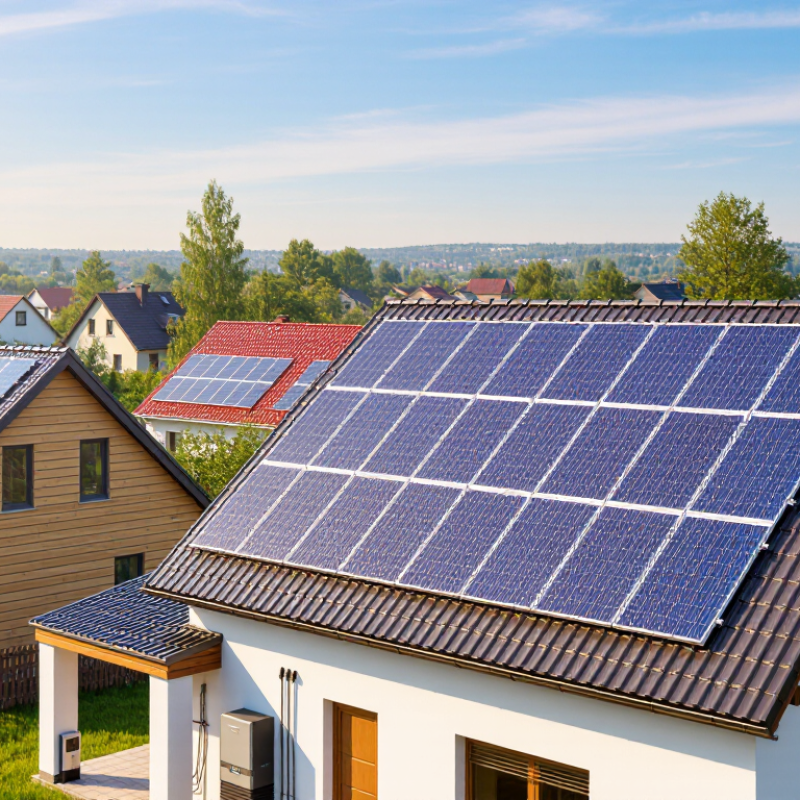
Your roof also matters. Check its usable area, direction, pitch, and shading throughout the day. Chimneys, nearby trees, and neighboring buildings may reduce production. Ask a qualified solar professional to compare your roof conditions with local sunlight data. Battery storage may help if your household uses more electricity after sunset. Consider future changes, too. An electric vehicle or home extension could increase demand. My first rough estimate was too optimistic because I ignored winter shading. It looked convincing on paper.
Tips: Compare your highest-use months, not only your annual average. Request a written production estimate with assumptions. Ask how the calculation handles shade, temperature, system losses, and panel aging. Leave safe access around roof equipment. A smaller system may be more practical than covering every available surface. Recheck your needs before signing, because household habits change.
| Assessment Category | What to Check | Example Input or Assumption | Estimated Result | How It Affects Panel Selection |
|---|---|---|---|---|
| Electricity Consumption | Review the last 12 months of electricity bills and identify average daily usage. | Monthly household consumption: 420 kWh Calculation: 420 ÷ 30 days |
14 kWh per day | Use annual or monthly utility data whenever possible instead of relying only on appliance estimates. |
| Future Electricity Needs | Consider planned additions such as an electric vehicle, heat pump, larger air conditioner, or home extension. | Expected future increase: 15% | 16.1 kWh per day (14 × 1.15) |
Choosing a system with limited expansion capacity may require replacing the inverter later. |
| Energy Conservation | Check whether insulation, LED lighting, efficient appliances, and thermostat settings can reduce demand. | Potential reduction after efficiency improvements: 10% | 14.5 kWh per day (16.1 × 0.90) |
Reducing consumption before installation can lower the required system size and roof area. |
| Peak Sun Hours | Determine the location’s average daily peak sun hours using reliable local solar data. | Planning assumption: 4.5 peak sun hours per day | 4.5 equivalent full-sun hours daily | Solar output varies by season, weather, shading, roof direction, and local climate. |
| System Performance | Allow for inverter losses, wiring losses, temperature effects, dust, and other system inefficiencies. | Planning performance ratio: 80% | 3.6 kWh per installed kW per day (4.5 × 0.80) |
A realistic performance factor prevents the array from being sized using ideal laboratory output. |
| Required Solar Capacity | Divide the target daily energy use by the expected daily production per installed kilowatt. | 14.5 kWh daily demand ÷ 3.6 kWh per kW | Approximately 4.0 kW | Round upward when seasonal production, future demand, or limited sunlight is a concern. |
| Panel Quantity | Match the required system capacity with the selected panel’s rated power. | 400-watt panels 4.0 kW ÷ 0.40 kW |
10 panels, or about 4.0 kW total | Panel wattage is only one factor; also compare efficiency, dimensions, temperature behavior, and warranties. |
| Roof Area | Measure usable roof space after excluding vents, skylights, walkways, setbacks, and shaded sections. | Approximate panel size: 1.9 m² per panel 10 panels × 1.9 m² |
About 19 m² of panel surface | Allow additional space for mounting clearances and maintenance access. Local building rules may require more area. |
| Roof Orientation | Check roof direction, pitch, structural condition, and nearby objects that may cast shadows. | Unshaded roof with a suitable orientation and moderate pitch | Potentially suitable for the planned array | Partial shading can reduce output significantly, so a site survey or shade analysis is recommended. |
| Daytime Usage Pattern | Compare when electricity is generated with when the household consumes electricity. | 60% of daily usage occurs during daylight hours | Higher opportunity for direct solar use | Timers, smart controls, or shifting laundry and water-heating loads to midday can improve self-consumption. |
| Battery Requirement | Decide whether backup power or evening energy shifting is needed. | Essential evening loads: 8 kWh Usable battery fraction: 90% Round-trip efficiency: 90% |
Approximately 9.9 kWh nominal battery capacity (8 ÷ 0.90 ÷ 0.90) |
A battery is not required for every grid-connected system. Size it around essential loads, backup duration, and budget. |
| Inverter Sizing | Confirm that the inverter can handle expected AC loads and is compatible with the solar array and any battery. | Planned array: about 4.0 kW Typical household peak demand: 3–5 kW |
Final inverter size requires a load and equipment review | Check continuous power, surge capacity, phase requirements, battery compatibility, and local electrical regulations. |
| Grid Connection | Confirm export limits, net-metering rules, interconnection requirements, and utility approval procedures. | Rules vary by location and utility | System size may be limited by local requirements | Obtain approval before installation and verify how excess electricity is credited or compensated. |
| Final Validation | Compare the preliminary estimate with a professional site assessment and a complete production simulation. | Review roof measurements, shade analysis, structural condition, utility rules, and seasonal output. | Final panel count and system design confirmed | The figures above are planning examples. Actual sizing should use the home’s measured consumption and location-specific solar data. |
Related Posts
-

Are There Options to Get Solar Panels for Free in 2026?
-

Top 5 Solar Energy Panel Tips for Global Buyers?
-
Why Should You Get Solar Panels for Your Home Now?
-
2026 Best Solar Panels in the USA What You Need to Know
-
China Top Solar Power Panels for Sustainable Energy Solutions?
-
2026 Best Residential Solar Panels for Sustainable Energy Solutions?