Best 10 Tips to Get Solar Panels for Home Today
In recent years, the demand for solar energy has skyrocketed. Many homeowners are eager to get solar panels for home use. According to the Solar Energy Industries Association, solar installations have increased by over 20% annually in the past five years. This growth demonstrates a shift towards sustainable energy solutions.
Experts emphasize the importance of understanding various factors before making a purchase. Daniel Green, a leading solar energy consultant, once stated, “Investing in solar panels for your home is not just a choice; it’s a responsibility toward our planet.” His words reflect a growing consciousness about climate change and energy independence.
However, the process to get solar panels for home can be daunting. Homeowners often feel overwhelmed by the options. Not all panels and installations are the same. There can be hidden costs and maintenance issues. Therefore, informed decisions are crucial for a successful solar investment.
Understanding Solar Panels: Benefits and Considerations
Understanding solar panels begins with recognizing their benefits. They harness sunlight to generate electricity, which can lower your energy bills significantly. Installing solar panels can also increase your home's value over time. Many homeowners appreciate the environmental impact. Using renewable energy reduces reliance on fossil fuels. This is a step towards a greener future.
However, there are considerations to weigh. The initial installation cost can be high. Not everyone can afford the upfront expense. There's also the matter of space. If your roof isn’t suitable, options become limited. Maintenance and long-term durability are key. Panels may need occasional cleaning and inspections. It’s also essential to check local regulations, as they can vary.
Engaging with professionals for a quote is advisable. Ask questions to grasp the entire process better. Many people experience buyer's remorse after installation. Researching beforehand can save heartache. It’s about making an informed choice. Solar energy can be a positive change, but it's not one-size-fits-all.
Evaluating Your Home's Suitability for Solar Panel Installation
Evaluating your home’s suitability for solar panel installation is crucial. Not every property is ideal for solar energy. According to the National Renewable Energy Laboratory, about 80% of rooftops are viable for solar panels. However, factors like roof orientation can heavily influence effectiveness. South-facing roofs typically receive the most sunlight. Trees and buildings may cast shadows and reduce efficiency.
Consider your roof's condition before installation. Older roofs may require repairs or replacement. Investing in a new roof can be costly, but it's vital. The lifespan of solar panels often exceeds 25 years. A sturdy base is essential for such a long commitment. Also, the angle of your roof affects energy capture. A flat roof might require additional equipment for optimal performance.
Local climate also plays a role in solar efficiency. Cloudy regions produce less energy. According to the Solar Energy Industries Association, sunny states see higher adoption rates. However, solutions exist for less-than-ideal conditions. Energy storage systems can compensate for lower solar generation. Your individual energy consumption patterns should be analyzed too. This can help determine the right system size and configuration for your specific needs.
Evaluating Your Home's Suitability for Solar Panel Installation
This chart represents various factors that affect the suitability of homes for solar panel installation. Each factor is rated on a scale from 1 to 10 based on its importance.
Researching and Comparing Solar Panel Providers and Products
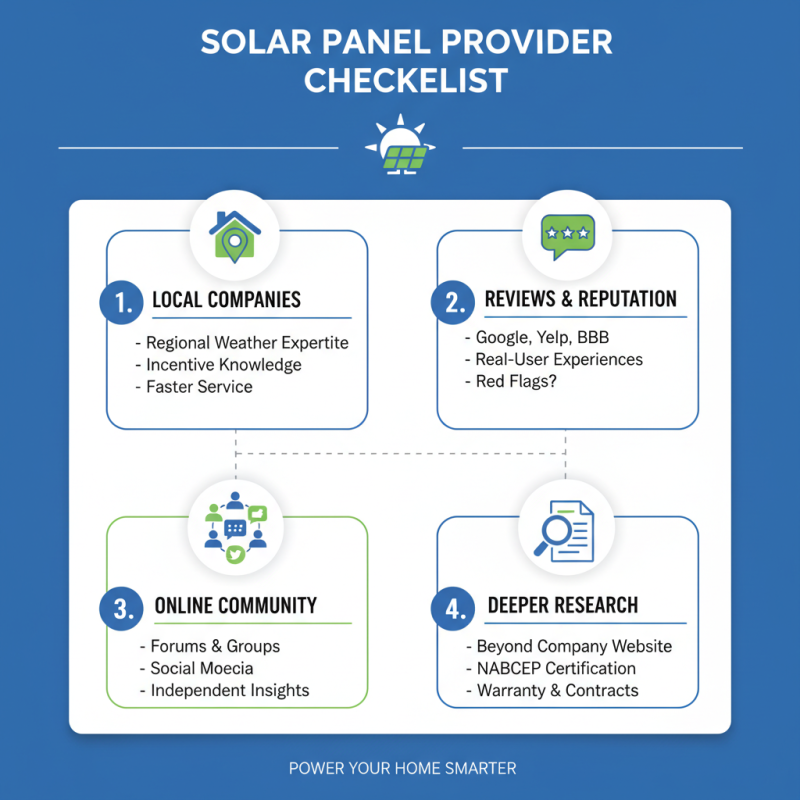
When researching solar panel providers, start by identifying local companies. Local businesses often understand regional weather conditions and incentives. Look for customer reviews to gauge their reputations. Check online forums or social media for real-user experiences and potential red flags. Don’t just rely on a company’s website; comprehensive research requires digging deeper.
Compare the types of solar panels available on the market. Different products come with varying efficiency rates and warranties. Some panels perform better in low-light conditions, which may suit your area. Ask for detailed specs from providers. Pay attention to not just price but also long-term value. Remember, the cheapest option may not always be the best. A panel with a longer lifespan could save you money in the long run. Scrutinize their installation processes too. Some providers have better practices than others, which could impact your system's performance, making it a crucial part of your decision-making.
Navigating Incentives, Rebates, and Financing Options for Solar Energy
When looking to install solar panels, understanding the available incentives is essential. Various federal, state, and local programs aim to make solar more accessible. Tax credits can significantly reduce upfront costs. Some areas might offer rebates that lower the purchase price even further. Researching these options can save you a lot of money. However, navigating these programs can be tricky.
Financing options are another critical aspect. Many homeowners may not be aware of solar loans. These loans allow you to install solar systems with low or no money down. Monthly payments may be lower than your existing utility bill, which is appealing. But it’s important to read the fine print. Not all loans are created equal, and interest rates can vary.
While incentives and financing can ease the financial burden, understanding them requires time and effort. Finding the right combination for your situation is not always straightforward. You might encounter bureaucratic red tape or delays in processing rebates. It’s vital to stay organized and patient throughout this process.
Planning the Installation Process and What to Expect on Installation Day
The installation of solar panels can be an exciting yet overwhelming process. Understanding what to expect on installation day helps reduce anxiety. Typically, the installation takes about one to three days, depending on the size of your system. On the day of installation, contractors often arrive early to set up. They will check the site and ensure everything is ready to go.
Most installations require scaffolding or ladders, especially for roof-mounted systems. The team will carefully position the panels, ensuring they are aligned for maximum sun exposure. According to the U.S. Department of Energy, an estimated 3.2 million homes used solar energy in 2022. This is a significant increase, but it also indicates rising demand for high-quality installation practices.
Despite thorough planning, unforeseen issues may arise. Weather conditions can delay progress. Additionally, not all roofs are equally suited for solar panels. Some may require reinforcement, which could add time and costs. Homeowners should be prepared for such challenges and communicate openly with the installation team. Understanding these details can lead to a smoother experience and help you enjoy the benefits of solar energy sooner.