Why Choose Commercial Solar Panels for Your Business Benefits and Savings?
In today's business landscape, choosing a commercial solar panel system has become an essential decision. These systems promise significant benefits and savings. Businesses often face rising energy costs. Investing in solar panels can mitigate these expenses. They harness the sun's energy, reducing reliance on fossil fuels. This shift can lead to lower utility bills and increase profit margins.
However, the initial costs of installation can be daunting. Some business owners hesitate, fearing financial strain. Yet, the long-term savings often outweigh these concerns. Many companies report a return on investment within a few years. Additionally, solar panels can enhance a business’s reputation. Showing commitment to sustainability attracts eco-conscious customers.
Choosing the right commercial solar panel is crucial. Wrong selections can lead to inefficiencies. It's important to assess energy needs carefully. Understanding this technology allows businesses to make informed choices. Solar energy can transform your operations and bottom line positively. The right investment today can lead to significant rewards tomorrow.
Benefits of Commercial Solar Panels for Businesses
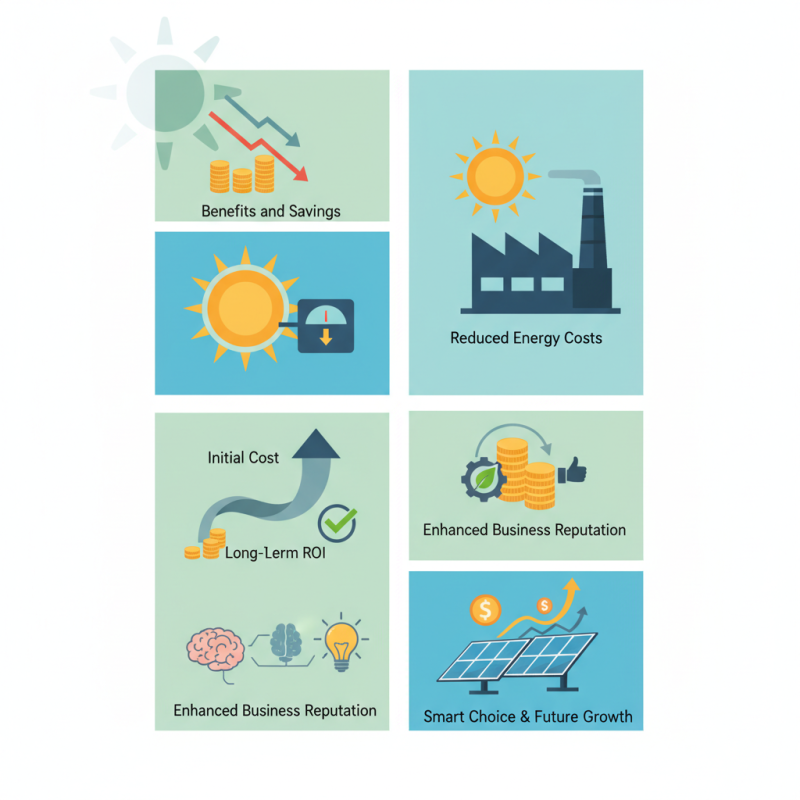
Many businesses are embracing commercial solar panels. They reduce energy costs significantly. A report from the Solar Energy Industries Association shows that solar can cut energy expenses by up to 75%. This reduction directly impacts the bottom line.
Using solar energy can enhance a company's reputation. Customers often favor environmentally friendly businesses. A survey indicated that 70% of consumers are willing to pay more for sustainable products. This statistic highlights the potential market advantage of going solar. However, some companies hesitate due to initial installation costs. Understanding long-term savings is essential, as some systems pay for themselves within five to seven years.
Moreover, installing solar panels can be complex. Businesses may face challenges in navigating incentives and financing options. For instance, the federal investment tax credit provides a 26% deduction on installation costs. Yet, many businesses might miss this opportunity due to lack of awareness. This complexity can be discouraging, but proper research can illuminate pathways to savings. Transitioning to solar may involve upfront challenges, but the long-term benefits often outweigh them.
Cost Savings Associated with Switching to Solar Energy
Switching to solar energy can lead to significant cost savings for businesses. According to the Solar Energy Industries Association, companies can reduce their electricity bills by up to 75% when installing commercial solar panels. This substantial reduction allows businesses to reallocate their resources to other critical areas.
Using solar energy also protects businesses from fluctuating energy prices. The U.S. Energy Information Administration reports that electricity prices have consistently risen. Predictable solar costs can provide a buffer against these increases. Many businesses find that the upfront investment pays off within a few years through savings.
Tips: Consider conducting an energy audit. This helps to determine how much energy you use and the potential savings from solar. Also, evaluate local incentives and rebates. These can significantly lower installation costs.
While solar energy offers many benefits, it’s essential to reflect on the initial investment. Not all businesses have resources for upfront costs. Leasing options or power purchase agreements (PPAs) can help. They allow businesses to enjoy savings without the heavy initial burden.
Cost Savings Associated with Switching to Solar Energy
Environmental Impact of Adopting Solar Technology
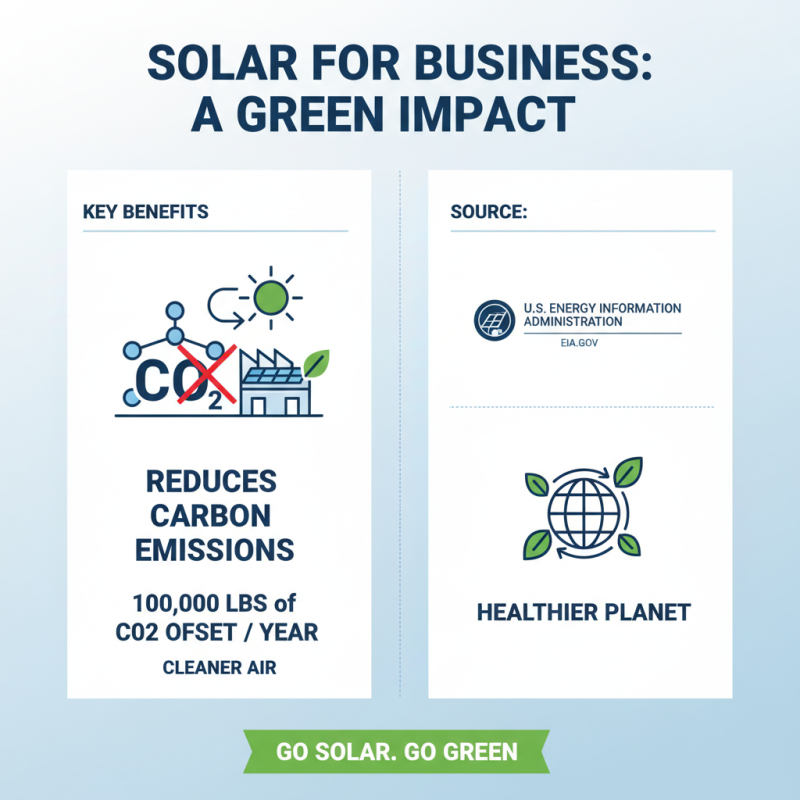
Adopting solar technology in businesses plays a significant role in reducing environmental impact. According to the U.S. Energy Information Administration, commercial solar panels can reduce carbon emissions significantly. A typical commercial solar installation can offset approximately 100,000 pounds of carbon dioxide per year. This reduction contributes to cleaner air and a healthier planet.
When businesses switch to solar energy, they help decrease reliance on fossil fuels. Research from the National Renewable Energy Laboratory indicates that solar energy can reduce greenhouse gas emissions by 40% compared to traditional energy sources. This shift is crucial, especially as global temperatures rise. Utilizing solar energy leads to a direct decrease in the environmental footprint of a company.
Tip: Regularly review your energy consumption. Identifying high usage areas can help optimize solar panel performance. Additionally, consider community solar programs if installation isn’t feasible onsite.
Investing in solar technology not only benefits the environment but also fosters a sustainable business model. Companies that take this step often find it vital in creating a positive brand image. They must be aware that the initial investment can be high. Long-term savings, however, make it worthwhile.
Financing Options for Commercial Solar Panel Installation
When considering commercial solar panels, financing options play a crucial role. Many businesses fear upfront costs. However, several financing solutions can ease this burden. Companies can explore loans, leasing, or power purchase agreements (PPAs). Each option has pros and cons. It's essential to analyze which fits your business model best.
Many companies overlook the importance of researching financing terms. Negotiate rates and terms diligently. Don’t just settle for the first offer. Also, seek to understand how these financing options affect cash flow. Some may have lower initial payments but higher overall costs.
Tip: Look for local or federal incentives that can offset installation costs. Sometimes, grants are available that can significantly reduce expenses. Another thing to consider is the return on investment timeline. This can vary greatly depending on the financing method chosen. Ensuring a thorough understanding can lead to better long-term savings.
Why Choose Commercial Solar Panels for Your Business Benefits and Savings? - Financing Options for Commercial Solar Panel Installation
| Dimension |
Description |
Potential Savings (%) |
Financing Options |
Payback Period (Years) |
| Initial Investment |
Cost of installation and equipment |
- |
Loan, Lease |
5-10 |
| Tax Benefits |
Tax credits and deductions |
30% |
Cash Purchase |
- |
| Operating Costs |
Reduced energy bills over time |
50-70% |
Power Purchase Agreement |
2-7 |
| Energy Independence |
Lower reliance on grid energy |
- |
Renewable Energy Certificates |
- |
| Environmental Impact |
Reduced carbon footprint |
- |
Green Bonds |
- |
Long-Term Value and Return on Investment from Solar Energy
Investing in commercial solar panels can be a game-changer for businesses. The long-term value of solar energy offers significant return on investment. By harnessing sunlight, companies can reduce energy costs substantially over the years. This helps improve overall cash flow. Imagine cutting your electricity bills by a large percentage. It’s a more sustainable option compared to traditional energy sources.
Solar energy systems require an upfront investment, which can seem daunting. Businesses might hesitate, questioning long-term gains. However, many states provide incentives that make the switch less burdensome. These incentives often include tax credits or rebates, reducing initial costs. Additionally, operational costs decrease as the energy source stabilizes.
Moreover, switching to solar contributes to brand image. Consumers increasingly prefer environmentally responsible companies. This shift can enhance customer loyalty and attract new clients. Businesses can present themselves as forward-thinking and socially conscious. While the transition to solar requires careful planning, the potential benefits often outweigh the concerns.